How to Trade Meme Coins Without Blowing Up Your Account
Need articles like this for your video? They help promote it on YouTube and Google — order them in the Telegram bot @sat_sit_bot. The bot writes and publishes the articles itself (with your YouTube video embedded) on popular topical websites (no ads). Your first 50 articles are free.
· based on the channel Orangie Web3
Key takeaways
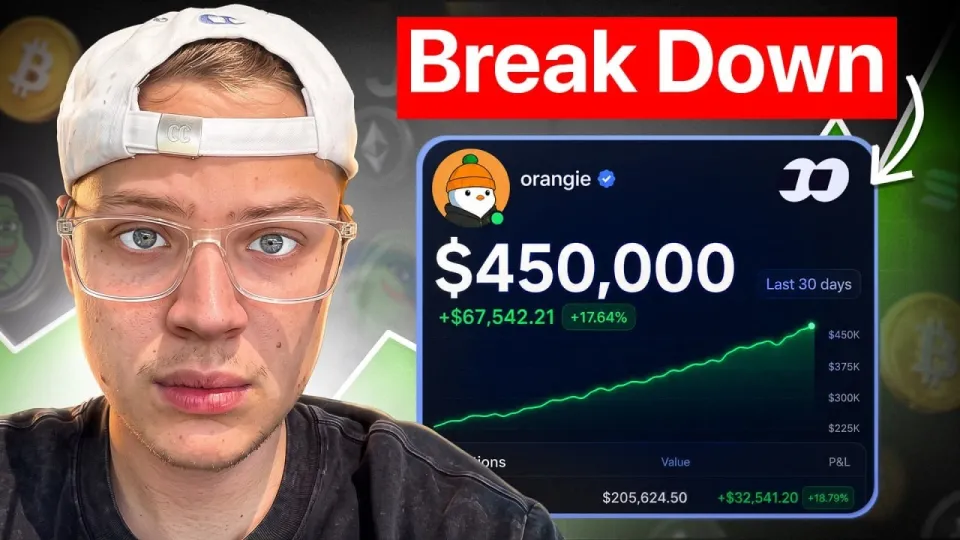
- Orangie Web3 reports turning roughly $450,000 in profit from meme coins in a 30-day window, with Solana tokens at the center of the strategy.
- Most meme coin losses come from oversized entries and thin liquidity, not from bad luck; a single 10x on 1% of a portfolio barely moves the total.
- The trader's own framing: you can lose most of a small stack and still recover with one hit, which only works if each bet is sized as expendable.
- A community around the strategy exists — the Kaizen group via Whop, the Fomo trading platform and a Discord — which also means calls and entries are shared, not solo.
- Graduated coins (those that survived a launchpad's bonding curve) behave differently from fresh launches and usually carry less instant-ruin risk.
Meme coins are high-volatility tokens with no cash flow, no roadmap obligations and price driven almost entirely by attention, so trading them profitably means treating every position as a lottery ticket with a defined cost rather than an investment. The workable approach is small fixed bets, fast exits, liquidity checks before entry and a written rule for when to stop. Orangie Web3, in a breakdown titled "How I Made $450,000 Trading Memecoins in 30 Days", walks through exactly that style of trading, and the Kaizen group behind the strategy is accessible through the Whop checkout page.
What a $450,000 meme coin run actually consists of
A six-figure result in a month is almost never one perfect trade; it is a distribution of many small losses, a handful of large wins and strict recycling of profits. The headline number in the video is a portfolio outcome, not a per-trade return, and that distinction matters: a trader who risks 1–2% of capital per position needs dozens of attempts to reach it, while someone who bets the account on one launch usually reaches zero first. In practice the mechanics look like this:
- Capital is split into many small tickets, typically $50–$500 each on a mid-size account, so a total loss is survivable.
- Entries happen early — during or right after a launchpad's bonding curve — where the upside multiple is largest.
- Profits are taken in tranches: initial capital out first, then partial sells on the way up.
- Losers are cut quickly instead of being held in hope of a bounce.
That structure explains why the same strategy produces wildly different results for different people. The variable is not the coin, it is the sizing.
Why most meme coin traders lose money
Most meme coin losses come from position sizing and liquidity, not from picking the wrong ticker. A token with $30,000 of liquidity cannot absorb a $5,000 sell without collapsing 40%, so a trader who enters large is already trapped before the chart turns. Three recurring failure modes show up constantly:
- Oversized first bets. New traders often start with most of their stack on a single coin, then have no capital left to take a second or third shot.
- Ignoring the exit. A token that goes 5x on paper is worth nothing until it is sold; thin order books mean the visible price is not the price you get.
- Treating a loss as a reason to double down. Averaging down into a dying launch is the fastest route to a zeroed account.
The honest version of the strategy, repeated in the video's own framing, is that you can lose the majority of a small stack and still recover with one hit — but only if each individual loss was small enough to leave you in the game.
A checklist before you buy any meme coin
A pre-entry checklist turns meme coin trading from gambling into a repeatable process. Run these checks in order and skip the coin if any of them fails:
- Contract safety. Check for mint authority, freeze authority and whether the developer wallet still holds a large share. On Solana, tools like RugCheck or the launchpad's own page surface this in seconds.
- Liquidity depth. Compare pool liquidity to your intended position. A useful rule: your ticket should be under 1% of liquidity so your own exit does not move the price.
- Holder distribution. A token where the top 10 wallets hold most of the supply is a token where those wallets decide your exit.
- Narrative and attention. Meme coins run on a story — a mascot, a meme format, a community joke. If you cannot explain the narrative in one sentence, the market probably cannot either.
- Graduation status. Coins that have graduated from a launchpad's bonding curve have already survived the first filter and usually trade with more depth than fresh launches.
Entries, exits and the discipline that separates the two
Discipline is the only edge that survives across coins, because the narratives rotate and the mechanics do not. Two rules do most of the work: take the initial capital out early, and set a hard stop on time as well as price.
On entries, the practical pattern is to buy in the first minutes of attention — when a coin is being discussed but before it is trending everywhere — and to size the ticket so that a 100% loss changes nothing about your month. On exits, a common structure is to sell 30–50% once the position doubles (recovering the initial stake), then trail the rest. If a coin has not moved within a set window, exit and redeploy; dead capital in a memecoin is a loss even at breakeven.
Slippage settings deserve their own line. Setting 20–30% slippage on a low-liquidity launch is how traders get filled at terrible prices by sandwich bots; 5–10% is usually enough on graduated coins, and if a trade fails at that setting, the pool is too thin for the size.
Where shared calls and communities fit in
Trading communities compress the learning curve but also concentrate risk, and both effects are real. A group where experienced traders post entries and reasoning — the kind of setup around the Kaizen group and the Discord linked from the video — gives a beginner a stream of candidates and, more importantly, a visible record of how exits are handled. What it does not give is a guarantee: by the time a call is public, the earliest buyers are already positioned, and the late entrants are the exit liquidity.
The workable middle ground is to use calls as a watchlist, not as instructions. Study why a coin was picked, check the contract and liquidity yourself, and size the position as if the call were wrong. The same applies to tooling: trading terminals such as Fomo speed up execution and let you see other traders' activity, but faster execution amplifies whatever sizing habits you already have.
Common questions from newer traders
Newer traders tend to ask the same handful of things, and the answers are less exciting than the videos suggest. The most frequent: how much to start with (an amount you can lose entirely without changing your life — for many people that is a few hundred dollars, not a few thousand), how many coins to hold at once (two to four, so you can actually track them), and whether to chase a coin that has already run (usually not; the risk-reward at that point belongs to whoever bought earlier).
Another recurring theme is speed. Fast-paced explanations suit people who already know the vocabulary, but anyone still learning should pause and replay rather than copy trades in real time — the cost of a misunderstood entry is real money. And a note that comes up again and again in the comments: losing most of a small starting stack is a normal part of the learning curve, provided the stack was small.
Useful links
- Kaizen group access: https://whop.com/checkout/plan_GTFkEFh0JFpU8?a=orangie
- Fomo trading platform: https://fomo.family/r/orangie
- Discord community: https://discord.gg/memecoins
- Instagram: https://www.instagram.com/orangieyt/
The bottom line on meme coin trading
Meme coin trading is a probability game where survival matters more than any single pick, and the $450,000 figure in the Orangie Web3 breakdown is the output of many small, capped bets rather than one heroic call. Treat each position as expendable, verify liquidity and contract safety before entry, take capital out early and keep the losers small enough that a single winner can still matter. The channel's walkthrough is a useful map of that process, and the Kaizen group at the Whop checkout page is where the strategy is discussed in practice. Nothing here is financial advice — meme coins can and do go to zero.
Questions & answers
How much money do you need to start trading meme coins?
Start with an amount you can lose completely without affecting your finances — for most beginners that is a few hundred dollars. The point of a small stack is that it lets you take many attempts and survive the losses, which is how the strategy actually works. Betting a large share of your savings on a single launch is the most common way accounts get wiped out.
How do you avoid rug pulls and scams?
Check the contract for mint and freeze authority, look at how much supply the top wallets hold, and compare pool liquidity to your intended position. If your ticket is more than about 1% of liquidity, your own exit will move the price against you. Skipping a coin costs nothing; entering a bad one costs everything you put in.
Is following calls from a trading group profitable?
Calls are better used as a watchlist than as instructions. By the time a call is public, early buyers are already positioned and late entrants often become the exit liquidity. Use the call to find candidates, then verify the contract and liquidity yourself and size the position as if the call were wrong.
What is the difference between graduated coins and fresh launches?
Graduated coins have completed a launchpad's bonding curve, which means they passed an initial filter and usually trade with more liquidity. Fresh launches offer bigger multiples but carry far higher risk of instant loss through thin pools or developer selling. Many traders keep the bulk of their activity in graduated coins and treat fresh launches as small lottery tickets.
Source: How I Made $450,000 Trading Memecoins in 30 Days · Markdown version